
Undetected vacuum losses and air ingress in your condenser can significantly reduce turbine power output and increase heat rate. CerTa Veritas offers independent condenser air-ingress testing services to identify system inefficiencies by detection and quantification of air ingress
Schedule a condenser assessment
Interested in improving your condenser’s performance? Let us conduct an independent air ingress and vacuum drop test to optimize your installation. Request a test or ask for a detailed approach best fitting to your situation.
Reach out today via:
info@certaveritas.com
+31 (0) 85 744 4066
We look forward to hearing from you and helping you uncover new opportunities for efficiency and insight.
Why test your condenser?
Losses in condenser vacuum are often caused by air ingress, undetectable by routine monitoring. Even minor leaks can lead to higher backpressure, reduced turbine efficiency, and increased operating costs. Also reduced ejector capacity can be the cause. Regular performance testing helps to prevent long-term degradation.
Our approach: Vacuum Drop Test
A dedicated vacuum drop test will be conducted under controlled conditions to evaluate the tightness of the system. The test is performed in compliance with the VGB performance standard, ensuring accuracy, repeatability and alignment with industry best practices.
TABEL in de kleuren van de website
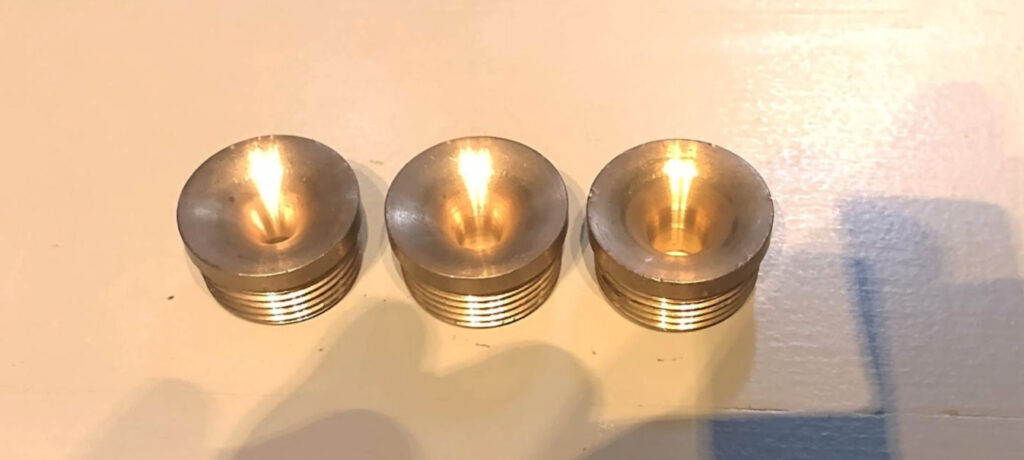
VGB-test nozzles for controlled air ingress
Nog een verbeterde foto maken
Common findings and recommendations
- External air leakage via flanges or fittings
- Ingress through turbine glands or low-pressure heaters
- Faulty ejector or vacuum pump systems
- Non-condensable air affecting the heat transfer
- Pollution of cooling water system
- Each test results in a practical report with clear findings and recommendations.

Added value for your power plant
- Reduced vacuum losses
- Higher turbine power output and reduced heat rate
- Improved plant availability and reliability
- Know the actual condition of your condenser
- Independent verification from a third-party specialist
Ensure Reliable Condenser Performance, Minimize Losses, Maximize Output
A well-functioning condenser is essential for maintaining optimal steam turbine efficiency. Undetected air in leakage or a declining vacuum can silently erode your plant’s performance, resulting in higher condenser pressure, reduced power output, and financial losses.
Air leaks into a condenser can significantly increase backpressure, reduce steam turbine output, and cause avoidable efficiency losses.
CerTa Veritas helps you stay ahead of these hidden threats.
Using advanced techniques, we assess condenser performance by monitoring vacuum gradient trends and precisely quantifying air ingress relative to design tolerances. This allows for early detection of performance issues, evaluation of vacuum system capacity, and informed decisions on whether leak detection or maintenance is required.

Air Ingress in Condensers: Impact and Diagnosis
Air ingress in the condenser of a steam turbine system causes an increase in condenser pressure. This leads to a reduction in power output of the steam turbine and thus loss of yield
Vacuum pumps or steam ejectors are used to extract the ingressed air and other non-condensables gases, mixed with some water vapor, from the condenser to the atmosphere
If the air ingress increases over time, the condenser pressure will go up, leading to a (further) decrease in steam turbine power output
Similarly, performance deterioration of the vacuum pump or ejector can result in insufficient removal of non-condensables, leading to the same negative effect.
Once a deteriorated vacuum condition is observed, it's essential to identify the root cause. A key step is to determine the actual air ingress rate and compare it with the system's design specification and the extraction capacity of the pump or ejector.
CerTa Veritas can measure the total air ingress flow by a 'vacuum drop test' using reference leaks with known flow characteristics.
With this measured air ingress flow (non condensables), it can be assessed whether the vacuum pump, or ejector capacity is sufficient for the current situation, or whether corrective actions, such as increasing capacity or locating and sealing leaks, are necessary to restore optimal condenser performance.
Maintain performance. Minimize losses. Make informed decisions.